|
Astronomy |
|
|
||||||
|
|
            
|
Sun
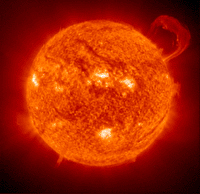
The Sun is closest star to Earth, at a mean distance from our planet of 149.60 million kilometers (92.96 million miles). This distance is known as an astronomical unit (abbreviated AU), and sets the scale for measuring distances all across the solar system. The Sun is a huge sphere of blazing gas, mostly ionized gas that makes vast amounts of light and heat which we call sunshine. The Sun is so big it could hold a million planets the size of the Earth. It looks like it is burning but it is actually exploding like a massive bomb. You can see in the above picture that the Sun's surface is a churning mass of explosions. Solar flares and fiery loops of gas leap out into the space. The Sun supports life on Earth. It powers photosynthesis in green plants, and is ultimately the source of all food and fossil fuel. The connection and interactions between the Sun and Earth drive the seasons, ocean currents, weather, and climate.
|
This site was last updated 08/20/06